| |
Forbes Asia interviews Amer Hashmi
If Pakistan ever develops its own version of India's Wipro or Infosys, it may be thanks to a Karachi entrepreneur named Amer Hashmi. He launched his tech company, System Innovations, or Si3, merely two years ago, he expects revenue of just $20 million in the current fiscal year and he employs only 130 people. But starting with an open field in Pakistan, he's following the same path as Wipro's Azim Premji and Infosys' Narayana N.R. Murthy—bringing expatriates with tech expertise back to Pakistan and lining up consulting and outsourcing contracts with Western multinationals.
The 35-year-old Hashmi is thinking big. Before long he plans to add offices in Dubai, Europe and China to the ones he has in Dallas, Toronto and Kuala Lumpur. He wants to go public in two years. And his revenue goal is audacious: $1 billion a year by 2015, after making a slew of acquisitions. That's a lot to accomplish in a city where electricity service is spotty, street protests occur regularly and terrorism is always a threat. But Wipro and Infosys certainly faced many obstacles when they were building their businesses. "We don't see any issues," says Hashmi, who owns 25% of the company, with five private-equity investors owning the rest. "We see a bright future."
From an early age Hashmi seemed destined to become a tech pioneer. His mother was a computer programmer, his father an army officer, and other family members were in business. Part of his childhood was spent in Toronto and part within the confines of the secluded Lahore American School. He earned a business degree at Canada's York University, then spent the first ten years of his career at MCI Systemhouse and IBM Global Ser¬vices, where he lined up clients and man¬aged projects in the U.S. and Canada.
All the while, Hashmi obsessed about Pakistan. He'd rush home for every vacation. He held running dialogues with expat Pakistanis about developments back home. And he spent his spare time analyzing why progress in the West was so much faster than in Pakistan. "There was a constant comparison in my mind between Pakistan and the West about how IT can be used for effective development," he says.
By 2003 Hashmi couldn't resist the pull of Pakistan any longer. "What we needed in Pakistan was a huge IT integrator like Infosys or Wipro," he says. "This really got me excited." He knew he had the management skills, but he needed information technology and business talent. For that, he focused on the rich expat community in the U.S. and Canada and began persuading Pakistanis at Accenture, IBM, AT&T and elsewhere to return home with him.
And for financing he lined up Khalid Rafi, a former senior partner at PricewaterhouseCoopers in Pakistan and now Si3’s chairman. Other investors signed on as the venture gained momentum, including industrialist Hussain Dawood, one of the country's richest people.
He set up Si3 with three employees and went about pitching his services to Pakistani companies. His open nature and eager, persuasive style made him a natural salesman. His overflowing enthusiasm probably made every pitch seem like a not-to-be-missed opportunity. Hashmi struck gold early, winning a $2 million IT contract from a company owned by the Pakistani army, National Logistic Cell, the largest logistics company in the country, with a fleet of 1,100 trucks. Si3 beat out such global giants as Siemens and KPMG. "Everyone told us we were crazy and that no one in the domestic market would pay us," he says. "But 25% of our revenue has come from government projects,
and I don't hear those skeptics anymore."
Then, in May of last year, Si3 snagged a $5 million, seven-year outsourcing deal with Mybank, a Karachi bank with 50 branches in 22 cities around the country that was still handling many of its operations by hand. Since then three other banks have asked Hashmi about turning over their computer operations to him. "The biggest benefit for us has been moving ahead with IT modernization without having to do it ourselves," says Mohammed Azimuddin, the bank's president and chief executive. "Just identifying the right people to hire would have taken us a whole year."
National Logistic Cell and Mybank quickly made Si3 one of the most prominent of the country's small band of tech-outsourcing firms. And the two projects now make good references for getting business from abroad. "Our strategy was to chase the untapped domestic IT spending," says Hashmi. "We did, and now we can tell the foreigners what we've done."
The foreigners are buying the story. Hashmi's company is automating the baggage-claims system for a major airline in the Middle East and upgrading the computer system for a supermarket chain in the U.S. (Hashmi says neither client wants to be named.) The Pakistani expats—some 30 so far—that he's lured back are bringing connections that will mean more overseas business. By 2008, he estimates, 20% to 25% of his revenue will come from outside Pakistan.
And with its name catching on abroad, Si3's revenues promise to grow quickly. The company did $7.5 million worth of business with 50 clients in its first full operating year, which ended last June 30. By the end of its second fiscal year this month, Hashmi expects to reach $20 million in revenue and break even as well. "We want to create the first billion-dollar IT services company of Pakistan," he boasts. "The business is there and the [corporate] budgets are there."
To get to $1 billion, Hashmi is counting on the growing Pakistan economy, which is spurring companies to boost their IT spending, and acquisitions. By 2009 the domestic IT market will top $5 billion, Hashmi expects, and he aims to grab a chunk of that. And over the next year he plans to start buying small Pakistani and overseas tech firms. With the foreign firms, he's counting on moving many of the operations to Pakistan to cut costs and on using their offices in the U.S., Canada and Europe to get business.
To accomplish that, Si3 needs a big new investor—Hashmi says he'll get one soon—and needs to hire in droves, which may be unrealistic. Tech entrepreneurs in Pakistan say staffing up is their hardest task because the quality of local graduates is poor, outside of a couple of schools. Hashmi acknowledges that a big road¬block is hiring people fast enough. He plans to add more than 100 employees over the next year, while moving his company from its nondescript headquarters to a new glass tower overlooking the beach. Meanwhile, Si3 is learning from Wipro and Infosys while teaming up with them on several projects. Eventually, Hashmi wants their help in building research and development centers in Pakistan. "We are finding a good relation¬ship working with the Indians and hope to build stronger ties, an overall very positive effect for Pakistan and India," he says. But Hashmi is thinking beyond the Indian model. Rather, he says, "We want to become the Accenture of Pakistan. The biggest challenge is putting it all together and managing this kind of growth."
While doing that, Hashmi tries to keep up his squash game and stay abreast of his favorite ice hockey teams. But it's a lost cause, given his hectic travel schedule, seven-day week at the office and his family life with his wife, Zainab, and 18-month-old daughter, Hasina. "Amer is above all a workaholic," says Zainab, who also attended school abroad and now works as the operations director for an engineering firm. "But when he can, he loves to play ball with his daughter."
For Hashmi, his dream for Pakistan is finally being fulfilled. "This is payback to my country' he says. "IT is what will catapult us from the Third World, and that's the passion that drives me." And if Si3 is someday called the Wipro or Infosys or even the Accenture of Pakistan, so much the better.
Financial Times UK | Published: September 19 2006
s IT and telecom sectors, the record so far is mixed – as is the outlook.
The government, however, sees the privatisation of Pakistan Telecom (PTCL) as a crucial step towards revitalising a sector that has seen robust growth in the past five years.
The number of fixed telephone connections rose from 3m in 2001 to more than 5m this year, according to statistics compiled by the Pakistan Telecommunication Authority (PTA), the main regulatory body. This has raised the telecommunications penetration from just over 2 per cent in 2001 to more than 4 per cent – a telling indicator of the growth of the sector.
The growth of the cellular phone sector has been far more spectacular with the number of mobiles in Pakistan today at more than 36m, from less than 500,000 five years ago – a rise in penetration for the mobile phone sector from below half a per cent in 2001 to more than 23 per cent.
Such numbers are often cited by high ranking Pakistani officials as evidence of the telecom and IT sectors growing in tandem and laying the basis for fast-rising opportunities for digital businesses.
“This is an era of fast-paced change. Pakistan is a country which is attracting investors both from within and outside. Sectors like IT and telecom are of much interest to prospective investors,” was how Shaukat Aziz, the prime minister, once spoke of the growing business.
But the profile of Pakistan’s IT industry – with annual software exports this year of about $300m, according to data compiled by Pasha (Pakistan Software Houses Association), the national umbrella organisation of the country’s software developers – is easily dwarfed by the vast scale of the successes achieved by the sector in neighbouring India.
Availability of skills is an issue. According to Jehan Ara, one of the leading pioneers of Pakistan’s software sector and head of Pasha, it takes businesses from between six and eight months after hiring an IT professional to train them to become “professional players in a company’s in-house digital business related work”. Ms Ara cites the need to have a fast-paced growth in IT-related training opportunities as the most vital challenge for the country.
She says Pakistan’s growth record, though not comparable to India’s, nevertheless shows signs of gathering momentum as the $300m estimate for this year’s software exports is sharply above Pasha’s estimate for last year’s $180m.
She compliments the government for ordering the construction of three IT towers in the cities of Karachi, Lahore and Islamabad – an experiment that tries to emulate similar support given to the industry in other successful Asian IT countries, such as China and Malaysia.
The towers would be equipped with power back-ups and high speed internet connections to meet the needs of companies, although bringing the IT sector and some of the key companies together under one roof would be their most vital contribution to the industry, says Ms Ara.
Others, such as Amir Hashmi, president of a two-year-old IT company being cited increasingly as a big success story, believes Pakistan has crossed some of the key humps that hampered growth of digital businesses. Mr Hashmi’s company, known as SI3, saw its revenues from the domestic Pakistani market during the past year jump 550 per cent to $5.5m from the year before.
The company’s growth has prompted Mr Hashmi to plan offices in the US for the North American market and Kuala Lumpur, Malaysia, for the east Asian market. “The success of the software sector is a reflection of a sense of movement across the industry,” he says.
Yet some analysts warn that the prospect of recurring political uncertainty could hamper Pakistan’s ambition to become a destination for large-scale investments that could improve the profile of its IT sector and contribute to the growth of digital businesses.
General Pervez Musharraf, the country’s US-backed military ruler, who came to power more than six years ago, has overseen an economic turnaround and recovery as well as privatisation of companies such as PTCL.
But Pakistan’s opposition political parties have vowed to join and confront his government as the country prepares for elections next year.
The general also faces personal threats, having survived at least three assassination attempts, believed to have been the work of Al-Qaeda and related groups.
“During a recent trip outside Pakistan, people did not ask me about how the sector works and about the environment we have in this country,” says the head of an IT company just returned from an overseas trip.
“They wanted to know what was happening to Musharraf and how far this would have an impact on the way we do business in this country.”
Telecom Plus interviews Amer Hashmi
Mr. Amer Hashmi, a business graduate, has previously held senior positions at MCI Systemhouse (USA), IBM Global Services, Canada and A.F. Ferguson & Co. Having spent about 15 years of running professional services ventures and polishing his skills abroad, Amer came back in 2003 to create Si3, to activate technology dynamics in organizations in Pakistan. He has also been very successful in bringing like minded skill-sets back home to Pakistan, some from Fortune 500 companies. Si3, with hand-picked world-class professionals from around the world, is all set to deliver the next generation if IT services in Pakistan. Amer Hashmi, President and CEO of Si3, shares his views with TelecomPlus
How do you find the working environs here?
Amer Hashmi -l am pleasantly surprised at the significant positive change in Pakistan in terms of top professionals moving back home and the competence of resources within the country. We are seeing a lot more activity in the public sector in the field of Information Technology. As we move forward, we would see more professionals coming back to the country. Like the telecom, the Information Technology is also going to be a booming sector because every sphere of business and economic activity would need IT as an essential component to deliver long-term business value.
Are you facing any problems in running your business affairs?
I would say yes and no. Yes in the sense that we are looking for some skill set, the high-end skill set like technical managers, who are difficult to find and we have to recruit them from USA, Canada, Europe or South East Asia. It is not that they are not here. It's just that it is very difficult to find them. No, for the reason that technical resources in terms of domain experts, networking, system analysis, software development, licensed software, bright young graduates with 2-3 years of experience, are available. So in terms of the technical staff that we need as we move forward, we do not have a problem.
Is it difficult luring ex-pats back home?
In a way it is difficult because we are not paying what they can get abroad. But there are professionals who have spent decades abroad and developed certain skill sets. There always were people who wanted to come back, apply their experience and contribute to the progress of the country. Earlier, the environment here was not very supportive by way of utilizing their experience and skill. But now the situation has changed and increasingly the ex-pats are getting the feedback that they can contribute to the growth through their value proposition. Their vision is to give something back to the country. Si3 has the same vision and together we make a natural fit. There are ex-pats within Si3 who are training locals to learn enterprise computing. People have moved back, having a vast relevant experience gained in globally renowned companies including: IBM, PwC, KPMG, AT&T, Accenture, Zurich Financial Services, IBM Global Services, Deloitte, Citibank and the like. They have best-of-breed methodologies, technologies and experience.
Why have Pakistani ex-pats not been as successful as Indian ex-pats in developing IT back home?
Indians were in large numbers abroad and working in senior positions in Fortune 500 companies since as early as 1980s. In the West, they developed three types of relationships. They had a relationship with their own employers; they had relationship with their clients whoever they were servicing, may it be Wall Street or Washington Dc. Third was the vendors. Vendors, like Nokia, Cisco, Huawei, etc who provide your IT solutions. This vendor relationship is most important because they have the best technologies in the world. So Indians have a large access factor and with these relationships they have been able to drive business in India. This is not the case with Pakistani ex-pats. There are some Pakistanis who are CEOs or Presidents. But the percentage of Indians in such positions is much higher. If you look at Fortune 500, there are Indians but no Pakistanis. This is the primary reason Indians have done so well.
What is your strategy of doing IT?
The idea behind setting up Si3 is to build an IT infrastructure. Look at public sector organizations like Defense, PIA, PSO, Pakistan Steel, etc. These organizations have huge potential for empowering themselves through
IT and some are doing it admirably well but there is still a lot to be done. Si3 did a project for a public sector company. Their concept of automation was just payroll, HR and sort of an MIS system. They did not realize that they needed an entire network, systems management, data center, storage, email, Business Process Re-engineering and so forth. So, we turned the whole project from backend system to an IT infrastructure and at a phenomenal price. By international standards, it was a project not less than $30 million. We completed this project within the budget, on time and at a fraction of the cost. Typically, Pakistan used to pay 200-300 dollars an hour. We were able to do it for 10-20 dollars an hour. Ass to it the transfer of knowledge to the local people who worked on the project and acquired first hand knowledge.
Let me give you another example. For the first time in the history of Pakistan a bank is outsourcing all of its IT work, It involves Zurich Bank and Citibank. Pakistan did not start this earlier because there was no company with the specialized subject matter expertise. We have been able to win the project in the short time because we have the required skill set. We have probably passed 16 blue chip-coins and we continue to grow.
Should we outsource the data center project or do it in public sector?
In my opinion it should be outsourced because it requires higher skill set to run the data center and it would be expensive for a public sector entity to hire and retain such resources.
It would be heavy investment from infrastructure and manpower perspective. Let the private sector do it. In the public sector people come and go which affects the consistency and quality of service. So we are very much pro for outsourcing. Make them accountable for it. Sign a SLA [Service Level Agreement]. Share the risks.0
Is the expertise available in Pakistan to outsource this project?
This is one of the basic reasons of building
Si3 in Pakistan. The employees at Si3 come
from background of Fortune 500 companies.
If you outsource a data center project to a
foreign company of Si3's level, they would
be charging at international rates which are
significantly steeper. We brought the
professionals of the same caliber to Pakistan.
They wanted to come back for various
reasons but there were not enough opportunities for them. We offered them the
working conditions, challenges and
excitement and they came over here. But
the quality of this human resource did not
change. And they have the added satisfaction
of exercising their expertise for their own
country in the homely environment they
wanted to come back to. So they are willing
to work at much lower salaries than their
foreign employers paid abroad. Also, we
are paying them in Pakistani currency and
saving foreign exchange. So, yes Si3 can
do the data center project. It is tailor cut for
this project and is probably the largest single
IT services investment on-ground in Pakistan
We are the only IT company in Pakistan to
have multiple data centers. We are the only
IT company which has a 220 IT outsourcing
model.
Do you have some international certification?
We have switched to CMMI, 'I' stands for Integration. Si3 is heading for Level 5 and we have got some audits done internally. This is very important for our internal processes. Si3 employees have PMP, CCIE and several other industry related qualifications.
What does Si3 stand for?
'S' is for systems and three ‘I’s stand for Integration, Innovation and Intelligence. We integrate large backend IT infrastructures, offering end-to-end solutions which cover all consulting, hardware, licensed software, applications, systems management, IT optimization, security, maintenance, help desk and networking needs. Why we call innovation because no one has done this in Pakistan. Our solutions are customized and very innovative as our Solution Design Center and Project Management Center of Excellence is staffed by consulting professionals with cutting-edge international experience who use business process mapping and business process redesign to align IT solutions with business objectives.
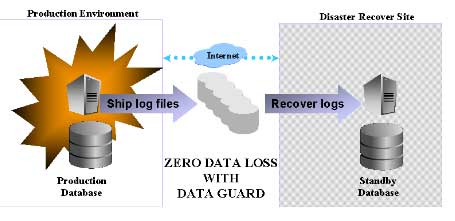
When we say that we deliver intelligently, that means we see your overall business value and then map an IT infrastructure and technology solution behind that using best-of-breed technologies. We are partnered with Fortune 10 companies of IT, having very strong relationships with Cisco, IBM, Symantec and Network Appliance. Our core business is services integration and outsourcing. We are end-to-end solution providers. We can say we are business technology experts. We also do Disaster Recovery Management. Other than banks there are many organizations that have business-critical systems running that can not go down. Si3's two data centers offer DR sites as well for our local clients. We are opening a third site as well, depending upon market demands.
What should be the role of state in promoting IT?
We have a dedicated ministry and a dedicated minister for ICT and it is one step towards promotion. In India it is very easy for IT companies to get funds, which should be practiced in Pakistan as well. The government should assist organizations in getting funds. Developing marketing perspective is another area the government should focus on. We have the skill set and the infrastructure platform for progress. We have to convince the global community that we are capable of delivering on our promises. It is also very important to outsource government projects to local private companies.
Any message?
We went operational in July 2004 and feel that owing to our experience abroad and after two years of work in Pakistan and being declared the "Best Start-Up^ Company 2005" by PASHA, we have now strong foundation domestically. We have a small office in Dallas, opening up others in Kuala Lumpur, Toronto and Middle East. In Pakistan, IT services will pick up. Hard work, a customer-oriented strategy and patience for change is required. Also further cooperation of industry associations like PASHA would be helpful. The President of PASHA and PSEB have been very active.
Pakistan: Better Late than Never In Outsourcing
Pakistan is trying to copy India's success in luring IT work, but it's slow going |
|
Think software and services outsourcing, and places like Bangalore, Manila, and perhaps Budapest spring to mind. But Lahore or Karachi? The Pakistani cities might not be on the outsourcing map yet, but the country's software shops are out to change that. "As a natural course, American companies would not look at Pakistan," acknowledges Jehan Ara, president of the 250-member Pakistan Software Houses Assn. "So we have to get them to look at us, and once they do business with us and credibility is established, they come back for more."
It makes sense for Pakistan to follow in India's footsteps and try to boost its outsourcing business. The country, after all, shares India's British colonial history and has some 17 million English speakers. It has a huge community of émigrés with experience in technology. And like India, it has a culture that values education and hard work. Wages, meanwhile, stand at about the same level as in India, with call center workers earning about $12 per day and starting software engineers pulling in $5,000 or so annually.
Still, Pakistan remains far behind India. Last year the country's software and IT services business hit just $300 million, and exports made up only about 11% of that. India, by contrast, booked $12.8 billion in software and services exports in 2004. But the Pakistan Software Export Board, a federal body set up to promote outsourcing, forecasts that the business will grow by at least 45% annually in coming years. "Pakistan started late but now is catching up very fast in software development," says Prime Minister Shaukat Aziz.
Lower-level operations such as call centers are expected to grow even faster: Some 120 centers have opened in Pakistan in the past two years. Today they employ 3,500 people, and that number is expected to grow by 60% a year. Arwen Tech, a Karachi company that runs a 600-seat center, saw its sales double last year, to $10 million, serving clients such as Pakistan International Airlines and the local franchisee for KFC Corp. (YUM! ). Now the company is building a 1,500-seat facility and hopes to boost revenues tenfold, to $100 million, in the next five years as it attracts more international clients.
Pakistan could use the boost that outsourcing provides. Unemployment is officially pegged at 8%, although in reality it's far higher than that, and the government is looking for ways to fuel economic growth. Pakistan needs technology to increase efficiency and productivity. And software exports will help the country move away from its reliance on textiles, which make up 65% of total exports.
YOUNG TECHIES
Still, Pakistan faces major hurdles. First, there's the question of security: Few Western execs are willing to entrust sensitive data to such a troubled country. And despite its 55 tech institutes, Pakistan may face a shortage of IT workers. About 75,000 people work in the sector today, and the government believes a further 7,000 will be needed each year to keep the industry growing at current rates. But the country's tech schools produce just 5,500 graduates a year -- and only about a fifth of those are competitive and well trained, the Software Export Board says.
The country is working to fix those problems. A new government commission aims to beef up education standards. Since 2001, Parliament has scrapped corporate taxes on software exports and simplified the investment process. In the next three years, the government also plans to open IT parks in Islamabad, Karachi, and Lahore. And the Pakistan Software Houses Assn. last year sent two delegations to India, then in February invited a group from Bangalore to Karachi and Lahore in an effort to learn from the Indian experience.
Outsourcing companies have developed their own strategies for beefing up their business. One is to look for customers in places other than the U.S., where Pakistan's image problems are most acute. In 1996, Lahore's NetSol Technologies Inc. (NTWK ) won a contract from Mercedes-Benz Leasing Co. in Thailand to install a software program from Britain. Later the company developed its own package, which it went on to sell to DaimlerChrysler (DCX ) in nine Asian countries. The NASDAQ-listed company now has 270 employees and this year expects sales of $10 million. In April NetSol signed a $2.3 million deal with Toyota Motor Corp. (TM ) and hopes to expand into Europe.
Karachi IT services firm System Innovations looked for work even closer to home. The company was conceived five years ago by Amer Hashmi, a six-year veteran of IBM's (IBM ) Global Services division in Toronto. The 34-year-old Hashmi saw an opportunity supplying software to state-owned Pakistani companies, and today counts the electric monopoly, Citibank's (C ) Pakistan operations, and Habib Bank Ltd. -- the country's second-largest -- among his 50 clients. Now, with 100 employees and $10 million in sales this year, Hashmi hopes to triple the company's size in the next 12 months by boosting sales to U.S. corporations. He plans to open offices in Texas and Ontario this summer.
Others have set up front offices in the U.S. to win customers. Lahore's Techlogix Pakistan, one of the country's first software exporters, gets 95% of its business from the U.S. Most of that comes in from a four-member sales team in Boston, which funnels work to 90 software developers in Pakistan and a further 35 in Beijing. The company booked $8.2 million in revenues in 2004 serving 18 clients, including General Electric Co. (GE ) and Massachusetts Mutual Life Insurance Co. "Our U.S. office has to offer the same kind of relationship-management as top-notch U.S. companies," says Kewan Khawaja, co-CEO of Techlogix. It may be a while before Karachi or Lahore has the resonance of Bangalore or even Budapest. But plenty of ambitious Pakistanis are working to make it happen someday.
India e-News | Published: October 23 2006
|

|
For Syed Nadeemuddin Ahmed, vice president for finance and human resources and company secretary at System Innovations, or Si3, it was the right time and the right opportunity to seize the moment.
He gave up his comfortable job at a multinational to work for Si3, a three-year-old start-up that provides end-to-end IT solutions including outsourcing. Amer Hashmi, Si3's founder and president, has been equated to Wipro's Azim Premji and Infosys's N.R. Narayana Murthy.
Hailing from Karachi, the 37-year-old was previously holding senior positions at IBM Global Services, MCI Systemhouse and A.F. Ferguson and Co (a member firm of PricewaterhouseCoopers) before deciding to strike out on his own.
"I've never worked for a start-up before. It has been six months now and it has been one of my best decisions. It's exciting. I'm learning new things every day," said Ahmed.
To further improve profitability, he said the mix between local and global businesses was targeted at 75:25. "Si3 has not restricted itself to Pakistan. We are targeting the $40 billion market in the Middle East and Africa."
Today in Pakistan, there are more IT entrepreneurs than four years ago. Many are young, ambitious, educated and willing to take risks. The IT boom is also luring Pakistani techies from abroad to return home.
An exceptional few had gone on to list their companies in the stock exchanges in Karachi and abroad. Among privately held companies, some secured seed money from venture capitalists with the hope of going for initial public offers in the next few years. There are those inviting foreign investors to become shareholders.
The country's IT sector is a $2.4 billion industry with annual exports of software and services amounting to $1.4 billion. IT spending in Pakistan is estimated to reach about $1.5 billion and is projected to grow at 35-40 percent annually.
The Pakistan government, the single largest spender in the domestic IT market, is expected to bill up to $400 million per annum for the purchase and upgrade of software and hardware. Multinationals and foreign governments are estimated to flush $200 million a year by engaging Pakistani companies for technological services.
"These are certainly exciting times. The sector has been booming for the past four years and we are seeing more improvement," Yusuf Hussain, managing director of the Pakistan Software Export Board (PSEB), told IANS.
The emergence of Pakistan's IT sector has been largely unheard of due mainly to its neighbour India's better perceived image, success and recognition as Asia's IT gateway. But the Pakistan IT industry wants to carve out its own success.
For starters, the cost of a 2 megabit per second dedicated Internet bandwidth in Karachi has dropped by more than half to $1,200 a month from $4,000. Industry players expect prices to drop further. Quality has also improved tremendously with less downtime.
To attract foreign investments, foreign companies are allowed to open shop with full ownership, including 100 percent repatriation of profit to their home country.
Pakistan has seen the number of foreign companies setting up their offshore operations in the country balloon to 60 with Karachi and Lahore as the preferred locations.
In 2006, exports growth registered a 56 percent jump over the previous year and PSEB expects such trend to continue in the following years mainly due to low operating costs in Pakistan.
In a comparative study done by PSEB, the cost of labour in Pakistan is found to be 30 percent and 70 percent cheaper than in India and the US, respectively. The attrition rate in Pakistan's IT sector hovers between 15 and 20 percent annually. At present there are 110 ISO-certified IT companies and the number is growing.
However, the single-biggest problem faced by the industry is the lack of soft skills - communication, interpersonal, presentation and English-speaking talent. With approximately 20,000 IT graduates produced by Pakistan each year, only 15 percent of these have the right quality, said PSEB's Hussain.
"Since the demand is so high, to keep pace with the demand and to leverage on this opportunities, we need to expand the quality of our manpower," Hussain added.
What does the future hold then?
"We look at this industry as the engine of growth for Pakistan. We see this industry changing business and social values of this country because it's an industry based on integrity, because of the merit-based foreign companies," Hussain said.
"This industry respects an individual because the individual is the key to companies. It's a new kind of business culture that's based on integrity, transparency and respect.
"We hope the growth of the industry is not just economically but also in terms of the values - respect, integrity, women empowerment and environment-friendliness."
|
|